OpenServ Launchpad
Web3 · DeFiOpenServ · 2025 – 2026
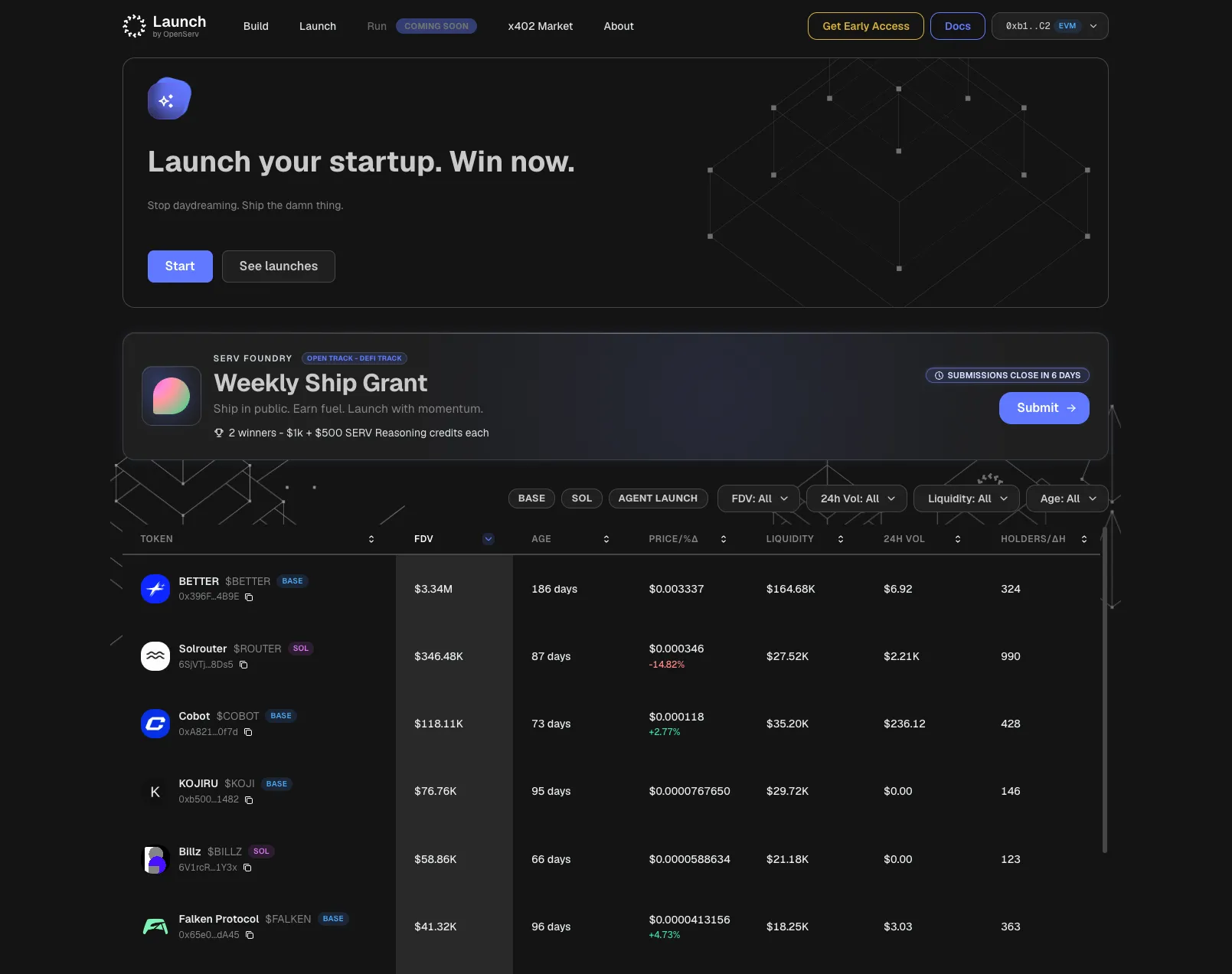
A multi-chain token launchpad that deploys tokens on Base and Solana in one click, with automated liquidity-pool creation, long-term LP locks, fee sharing, vesting, and staking.
I helped build a multi-chain launchpad that lets anyone launch a token with credible tokenomics in one click.
Context
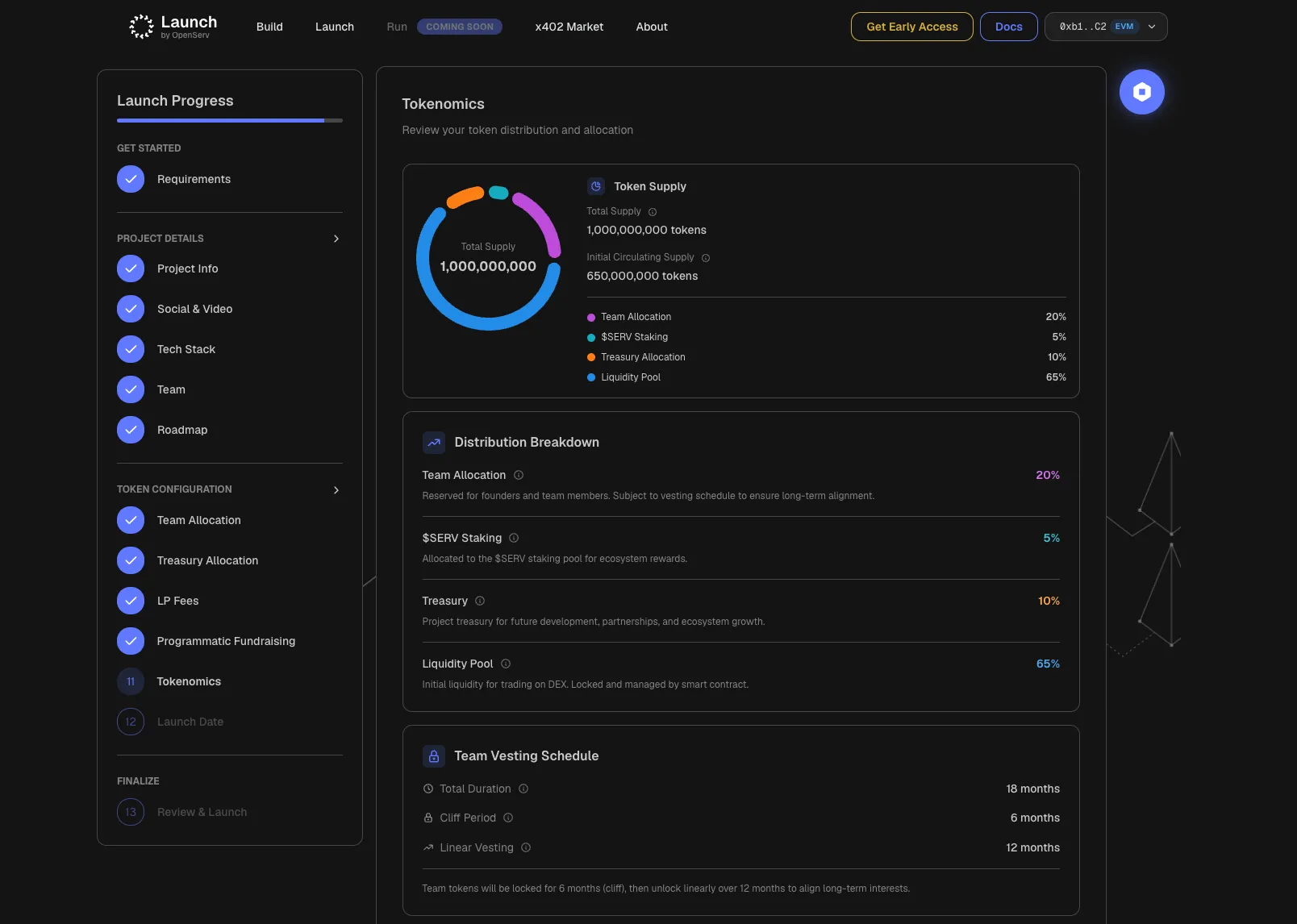
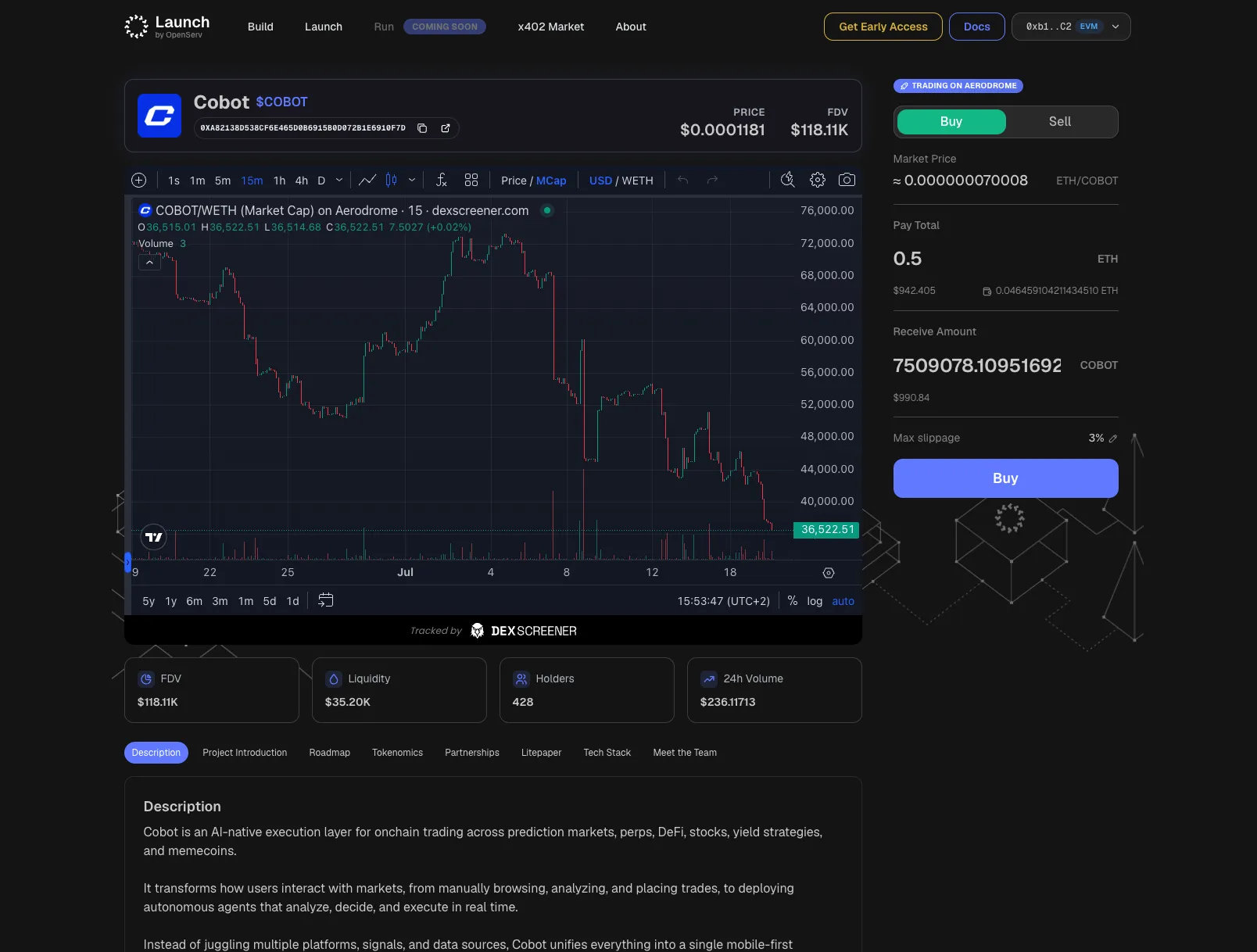
Launching a token normally means deploying a contract by hand, seeding a DEX liquidity pool, locking the liquidity, and setting up vesting. It’s a multi-step, error-prone process, and every chain does it differently. OpenServ Launchpad collapses all of that into a single API call that runs the full sequence for each chain. On Base it deploys an ERC-20, creates an Aerodrome concentrated-liquidity pool, applies a long-term LP lock, executes an anti-snipe initial buy, and sets up Sablier vesting. On Solana it mints through Metaplex, creates a Meteora CP-AMM pool, wires up a dynamic fee-sharing vault, and sets up Streamflow vesting, with Jito MEV protection on mainnet launches.
The system is a pnpm monorepo of five deployable services: a Fastify API with chain-specific launch orchestrators behind one interface, a React Router v7 SSR frontend, a Ponder indexer that streams on-chain launchpad events into MongoDB, the Solidity contract suite (instant launch, a custom bonding-curve launchpad with graduation to Aerodrome, and tax contracts), and scheduled operational jobs that claim and sweep LP fees automatically.
My role
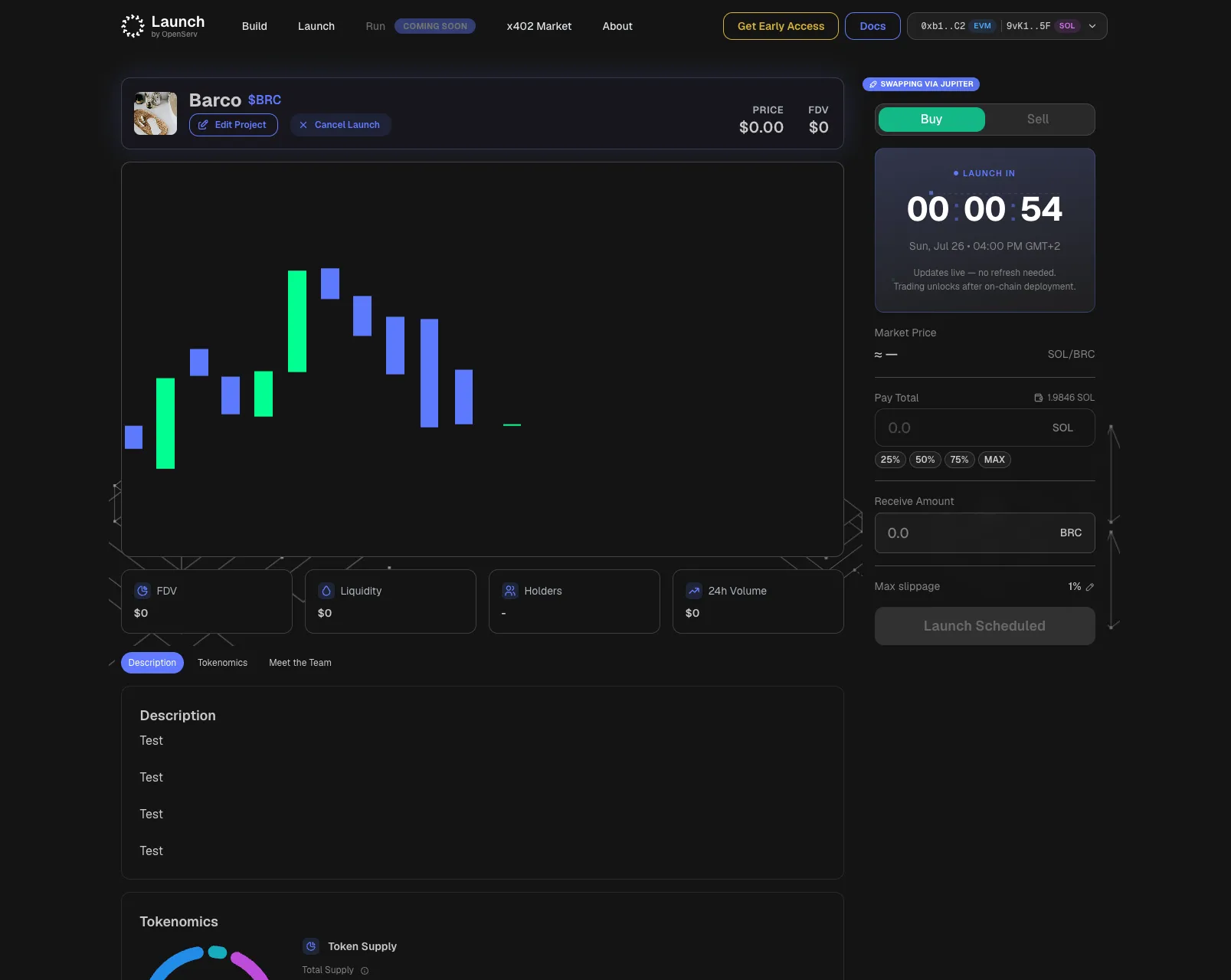
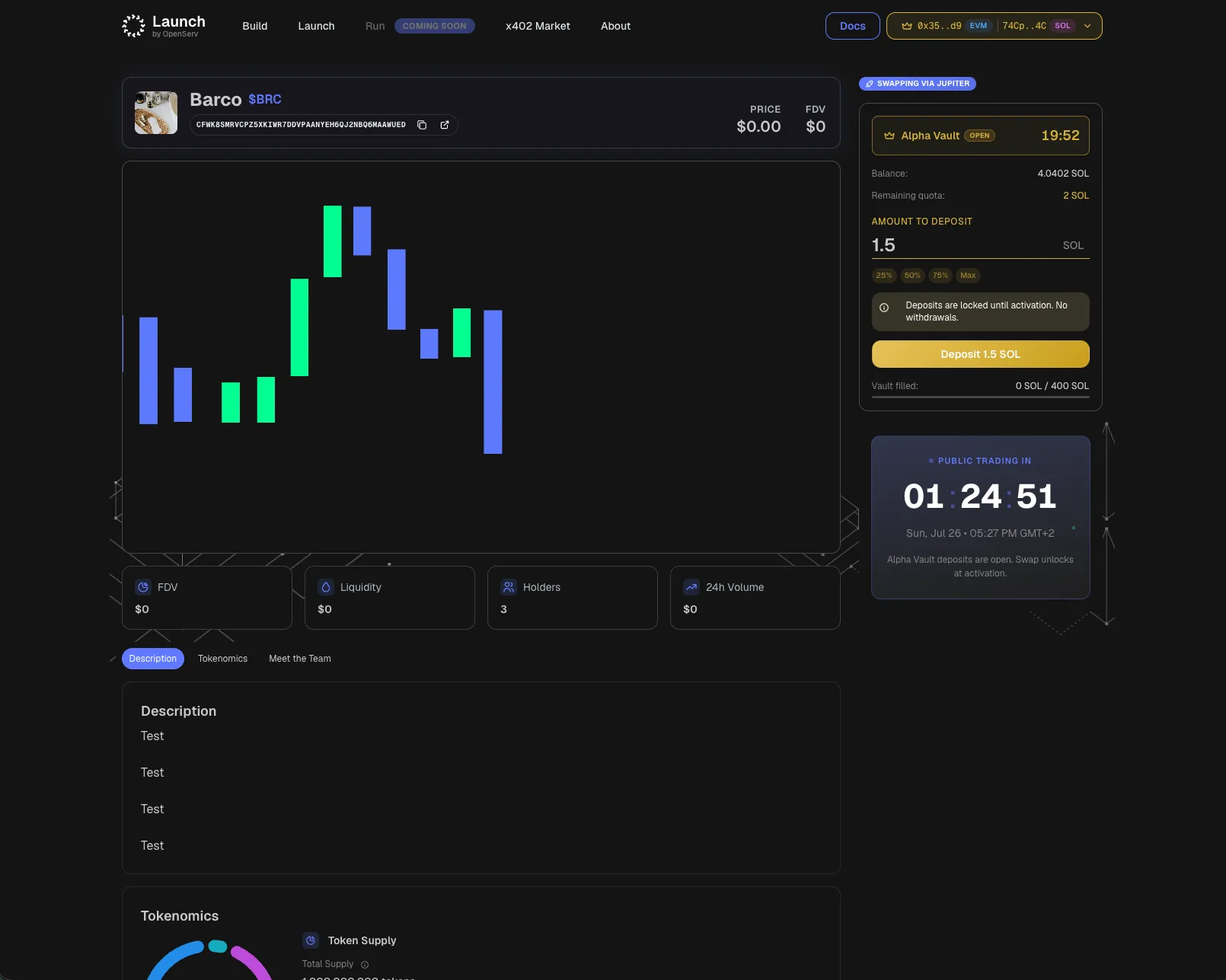
Lead engineer on the product, working in tandem with a blockchain developer. I helped architect the solution and built across the full stack, with a focus on the places where the product meets the chain. I developed the token creation workflow, and the app’s wallet-based interactions on both chains: logging in with a crypto wallet, swaps, staking flows (stake, unstake, claim), and integrations like Meteora’s alpha vault on Solana. I built the UI that reads live on-chain data and presents it, and worked with the chains’ SDKs to deploy tokens and create vesting streams.
Highlights
- Chain abstraction as a strategy pattern. One API fronts two chain-specific launch orchestrators, so the deep differences between the EVM and Solana stay behind a uniform interface.
- Deep Solana fee plumbing. Position NFTs are handed to a dynamic fee-sharing vault at launch, and scheduled jobs claim the platform’s fee share only once it clears a transaction-cost threshold.
- Automated LP-fee revenue. Creator and platform splits are enforced automatically, with a revenue dashboard on top.
- Custom bonding-curve contracts in Solidity (Hardhat, OpenZeppelin upgradeable) with graduation to Aerodrome, a curve-parameter registry, and an on-chain ETH price registry. Contract tests run against Base mainnet forks.
- Multi-signature-scheme auth. SIWE for EVM wallets and signature verification for Solana wallets.
- An agent-facing API. The launch capability is also published as an installable AI-agent Skill (
openserv-launch), so autonomous agents can launch tokens through the same backend that serves the human UI.
Images